
Quick AnswerThe best places to buy wholesale hardware in Canada include liquidation suppliers, hardware wholesalers, manufacturer direct programs, and online B2B marketplaces. Maple Liquidation offers Canadian businesses discounted bulk hardware sourced through liquidation channels. |
Most business buyers land on one of four sourcing routes. Liquidation pallets deliver the steepest discounts but come in mixed condition. Traditional distributors give you consistency at a smaller markdown. Manufacturer direct programs reward high volume with the best per-unit pricing but demand large minimums. Online B2B marketplaces sit in the middle. Which one fits depends on your volume, your margin targets, and how much variability your business can absorb.
Introduction
Ask any Canadian contractor what has changed most about running their business over the past few years, and hardware costs will come up fast. Retail shelf prices on power tools, fasteners, fittings, and outdoor equipment have climbed steadily, and paying full markup on every drill, box of screws, and length of conduit quietly eats a project’s margin. The same pressure hits retailers stocking shelves, property managers maintaining dozens of units, and e-commerce resellers who need inventory that still leaves room for profit.
The problem is not finding hardware. It is finding quality hardware in bulk without overpaying, and knowing which supplier types actually serve your volume.
This guide walks through why wholesale sourcing works, the five main supplier categories in Canada, how to vet a supplier before you wire money, what real bulk pricing looks like, and how the liquidation model differs from everything else. Maple Liquidation is one of the options covered, and we have flagged where it fits and where it does not.
Why Buying Wholesale Hardware Makes Sense for Canadian Businesses
Buying wholesale is not just about paying less per item. It changes how predictable your costs are, how fast you can quote a job, and how much cash sits idle in your supply chain.
Cost Savings vs. Retail Pricing
Retail hardware pricing carries the full weight of store overhead, leases in expensive retail corridors, staffing, seasonal promotions, and shrink. Wholesale channels strip most of that out. Liquidation channels strip out even more, because the goods have already been paid for once and the seller’s priority is moving volume, not maximizing per-unit margin.
Here is what the same sourcing decision typically looks like across channels. Figures below are illustrative examples based on common retail price points and published liquidation pallet pricing as of August 2026, always confirm current numbers with the supplier.
| Sourcing Channel | Discount off MSRP | Per-Unit Cost Control | Condition Consistency | Cash Required Up Front |
| Big-box retail | 0–15% (sale events) | Excellent | New only | Low |
| Contractor / pro desk account | 10–25% | Excellent | New only | Low to medium |
| Traditional wholesale distributor | 25–45% | Very good | New only | Medium |
| Manufacturer direct (bulk program) | 35–55% | Excellent | New only | High |
| Liquidation pallets & truckloads | 50–80%+ | Lot-level, not unit-level | Mixed (new, open-box, returns) | Medium |
The trade-off is visible in the last two columns. Liquidation buys deliver the deepest discount but you are buying at the lot level, and condition varies. That is fine for a reseller who sorts and grades. It is a poor fit for a contractor who needs eight identical, warrantied, brand-new impact drivers on Monday morning.
The Margin Math That MattersA liquidation pallet listed at $1,650 that contains a mix of hardware and outdoor equipment only makes sense if the recoverable retail value clears your cost plus freight plus your sorting time. A useful rule among experienced resellers: aim for a landed cost of 25–35% of realistic resale value, not of MSRP. MSRP is a marketing number. Realistic resale value is what comparable items actually sell for on marketplaces in your region this month. Do this math before you buy, not after the truck arrives. |
Who Needs Wholesale Hardware
Wholesale hardware sourcing isn’t only for large operations. The buyer profiles that benefit most:
- General contractors and trades – consumables, fasteners, blades, and backup tools bought in volume instead of one job at a time
- Property flippers and renovators – bulk hardware for repeat builds where finish consistency across units matters
- Independent hardware retailers and discount stores – inventory bought below distributor cost so shelf pricing stays competitive against national chains
- Property managers and building maintenance teams – plumbing, electrical, heating, and door hardware kept in stock so a failed unit doesn’t sit idle
- E-commerce and marketplace resellers – sellers on eBay, Facebook Marketplace, Amazon, and auction platforms who profit on the spread between liquidation cost and resale
- Exporters – buyers consolidating Canadian-sourced goods for outbound shipment
Bulk Buying Means Consistent Supply for Projects
The underrated benefit is scheduling. When you own the inventory, a backordered SKU at the pro desk doesn’t stall your framing crew. For businesses running several jobs at once, holding a buffer of fasteners, fittings, and common tools converts a supply problem into a storage problem, and storage is far cheaper than downtime.
What Is a Wholesale Hardware Business?
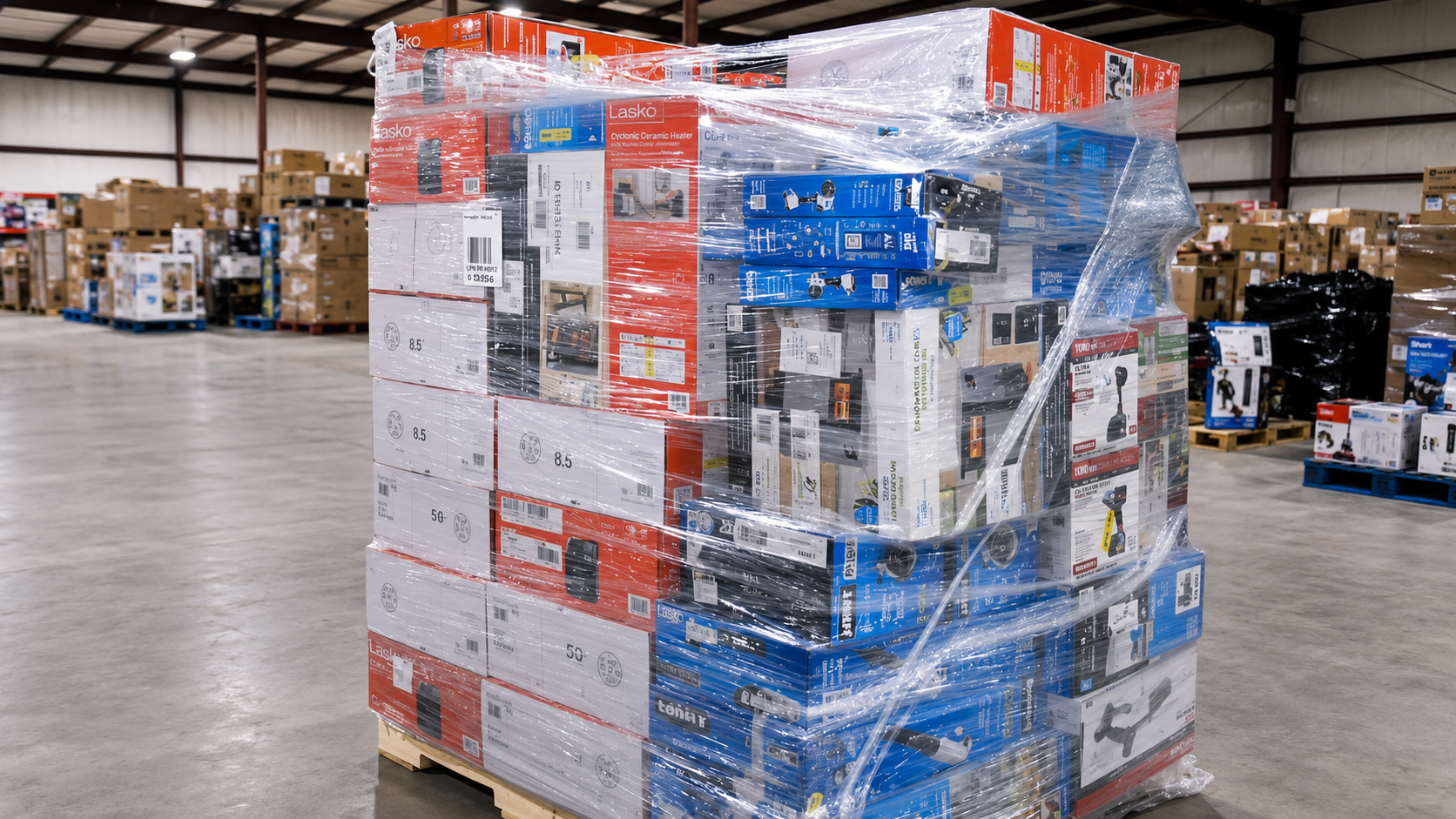
A wholesale hardware business buys hardware in large quantities, from manufacturers, importers, or retailers clearing inventory, and resells it in bulk to other businesses rather than to individual consumers. It earns margin on volume and efficiency instead of on high per-item markups. Wholesale hardware businesses generally fall into three groups: stocking distributors who warehouse a defined catalog and resell it case by case; brokers who arrange large lots without holding much inventory; and liquidation wholesalers who buy overstock, shelf-pulls, and customer returns from major retailers and resell them by the pallet or truckload. Most sell only to registered businesses, often requiring a business number, a GST/HST number, or a resale certificate before opening an account.
Types of Wholesale Hardware Suppliers in Canada
Five distinct supplier types serve the Canadian market. They are not interchangeable, and most established businesses use two or three at once.
1. Traditional Hardware Wholesalers and Distributors
These are stocking distributors carrying defined catalogs of tools, fasteners, safety supplies, and building hardware. They sell to trades and retailers on business accounts, often with net terms once you have a payment history.
Established Ontario-area names in this space include Interline Wholesale Hardware, which operates from Concord/Vaughan in the Greater Toronto Area and supplies contractors, project supervisors, and outdoor maintenance professionals with brand-name tools plus repair service. Buyers searching for Interline Wholesale Hardware Distributors Ltd or Interline wholesale hardware Vaughan are usually looking for exactly this model a trade counter with consistent, warrantied, new stock.
Strengths: predictable catalog, new goods, warranty support, technical advice, repair services.
Limitations: discounts are moderate; you pay for the service layer.
2. Manufacturer Direct and Bulk Order Programs
Buying straight from the manufacturer or its Canadian master distributor delivers the best per-unit price on new goods, if you can meet the commitment. Programs usually require container-level or annual-spend minimums and a formal application.
Strengths: lowest cost on new, warrantied product; brand consistency.
Limitations: high minimums, long lead times, limited SKU flexibility, and little room to test a category before committing.
3. Liquidation and Overstock Suppliers
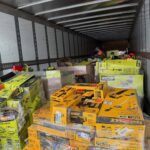
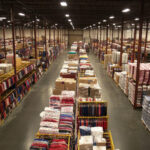
Liquidation wholesalers buy retailer overstock, shelf-pulls, seasonal clearouts, and customer returns, then resell them by the pallet, gaylord, or truckload. This is where tool liquidation Canada and DeWalt liquidation Canada searches lead, because major tool brands move through these channels in volume.
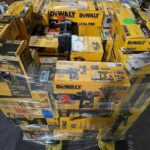
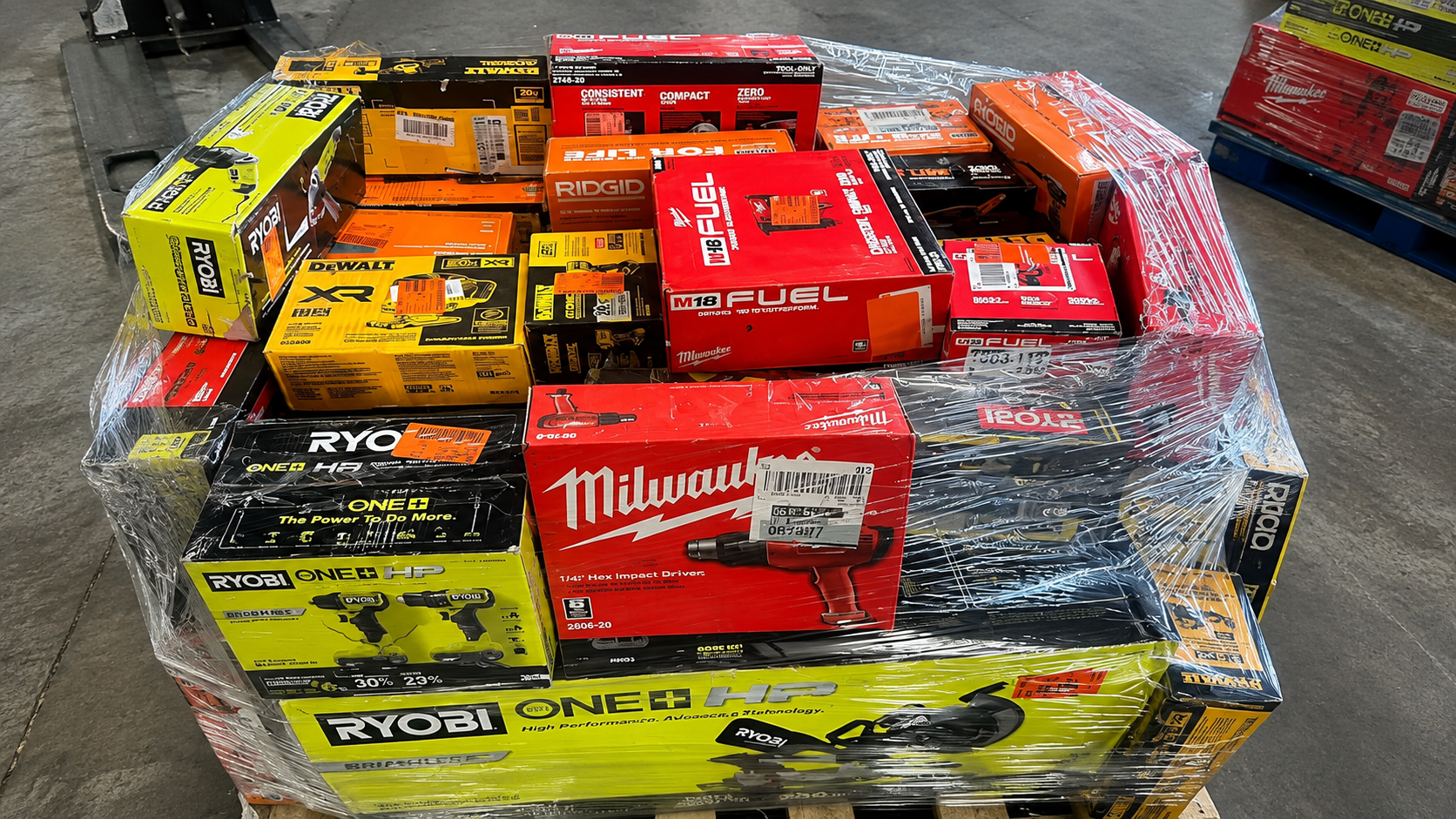
Maple Liquidation operates on this model. Inventory is sourced directly from top Canadian retailers on a weekly basis at wholesale prices, which removes intermediate markups and leaves resale margin for the buyer. A single pallet such as the Premium Brand Power Tools & Hardware Equipment Pallet #49 can carry Milwaukee M18 FUEL tools, DeWalt XR brushless drills, Ryobi ONE+ HP equipment, and Ridgid gear in one lot.
Strengths: deepest discounts available, brand-name inventory, no long-term contract, entry points well under a container load.
Limitations: mixed condition, limited or no manifest on some lots, and pallets typically sold as-is.
4. Online B2B Marketplaces
Platforms like Alibaba, Faire, and Global Sources connect buyers with suppliers at scale. Alibaba works for overseas factory sourcing and private-label runs; Faire suits retailers buying finished consumer goods with net terms. Both are legitimate tools, with the usual caveats: verify supplier credentials independently, expect longer transit from offshore sources, and budget for duties, brokerage, and currency swings when landing goods in Canada.
5. Local Trade Shows and Auctions
Regional trade shows, industrial auctions, and bankruptcy sales can produce excellent one-off buys, especially on equipment. They reward buyers who can inspect in person and act fast. They are unreliable as a primary supply line because availability is unpredictable.
Supplier Type at a Glance
| Supplier Type | Best For | Typical Minimum | Condition | Lead Time |
| Traditional distributor | Trades needing reliable new stock | Case or small order | New | 1–5 days |
| Manufacturer direct | High-volume retailers | Container / annual spend | New | 4–16 weeks |
| Liquidation supplier | Resellers, discount retail, exporters | One pallet | Mixed | 1–10 days |
| Online B2B marketplace | Private label, niche categories | Varies widely | New | 2–10 weeks |
| Trade shows / auctions | Opportunistic equipment buys | Lot-dependent | Varies | Immediate pickup |
What to Look for in a Wholesale Hardware Supplier
Vetting matters more in wholesale than in retail, because the dollar amounts are larger and the recourse is usually smaller. Work through this checklist before your first order with any new supplier.
Supplier Vetting Checklist
☐ Product quality and authenticity – Confirm the sourcing chain. Ask which retailers or manufacturers the goods came from. Photographs of the actual lot, not stock images, are a strong signal.
☐ Condition grading disclosed in writing – “New,” “overstock,” “shelf-pull,” “customer return,” and “salvage” mean very different things. Get the grade stated before payment.
☐ Manifest availability – A manifested lot lists contents and quantities. An unmanifested lot is priced lower to reflect the added uncertainty. Neither is wrong; knowing which you are buying is essential.
☐ Minimum order quantities (MOQs) – Understand whether the minimum is one pallet, one truckload, or a dollar threshold.
☐ Shipping and delivery across Canada – Confirm coverage to your province, and specifically to rural or remote addresses where LTL freight surcharges apply.
☐ Delivery requirements at your end – Do you have a loading dock, or do you need a liftgate? Missing this detail is the single most common cause of a failed first delivery.
☐ Return and warranty policy – Read it before ordering, not after. Many liquidation lots are explicitly final sale.
☐ Pricing transparency – Total landed cost should be clear: lot price, freight, taxes, and any handling fees.
☐ Business account support – A named contact who answers questions about inventory and manifests is worth real money over time.
☐ Verifiable contact details – A working phone number, a business email, and a physical presence in Canada.
Product Quality and Authenticity
The most reliable authenticity signal in the liquidation market is a clearly stated Canadian retail source. Goods pulled from major Canadian retailers are genuine by definition; the question is condition, not legitimacy. Be more cautious with offshore listings of brand-name tools at prices well below any plausible wholesale cost.
Minimum Order Quantities
Liquidation has the lowest practical entry point of any wholesale channel: a single pallet. In the wholesale hardware Canada market, pallet pricing commonly runs from roughly $1,200 to $4,500 depending on brand mix and category, which puts a first test order within reach of a small business without a credit facility.
Shipping and Delivery Across Canada
Freight is the variable that quietly decides whether a deal is good. A pallet priced attractively in Ontario can lose its advantage shipping to Yellowknife or Corner Brook. Always request a shipping quote to your exact postal code before committing. Maple Liquidation ships nationwide across Canada and provides quotes by email or phone.
Return and Warranty Policies
This is where liquidation differs most sharply from distribution. Liquidation pallets are frequently sold as-is, with no exchange or refund. Maple Liquidation states this directly on its product pages, which is the transparency you want to see. Manufacturer warranties may still apply to unopened, unregistered items depending on the brand’s policy, but you should not assume warranty coverage as part of your margin math.
Pricing Transparency and Business Support
Ask for the all-in number. A supplier who will give you lot price, freight estimate, and tax treatment in one message is telling you something useful about how they will handle the rest of the relationship.
Where to Buy Wholesale Hardware in Canada – Top Options
Liquidation Marketplaces
Liquidation is the fastest-growing wholesale hardware channel in Canada, largely because retail return volumes have grown alongside e-commerce. Returned and overstocked goods have to go somewhere, and that somewhere is increasingly a liquidation wholesaler rather than a landfill.
Maple Liquidation is a Canadian liquidation supplier serving business buyers nationwide. Its wholesale hardware and tools inventory is organized into pallets and truckloads across categories including:
- Power tools – DeWalt, Milwaukee, Ryobi, Ridgid mixed lots
- Hand tools – DeWalt 20V MAX, Milwaukee, and Husky assortments in gaylords
- Outdoor power equipment – mowers, trimmers, blowers, and seasonal gear
- General hardware and building supplies – assortment pallets like the Hardware & Outdoor Equipment Assortment Pallet #165
- Heating, plumbing, and electrical – including the Heating & Hardware Assortment Pallet #140
How the model saves money: inventory is bought directly from top Canadian retailers each week at wholesale prices, cutting out the intermediate brokers who normally take a cut between the retailer and the reseller. That compression is what leaves room for the buyer’s margin.
Coverage: shipping is offered across Canada, Ontario, Quebec, British Columbia, Alberta, Manitoba, Saskatchewan, Nova Scotia, New Brunswick, Newfoundland and Labrador, PEI, and the territories, with quotes provided per destination. Listed shipping estimates on many pallets run 1 to 5 business days.
Best fit for: resellers, discount retailers, auction sellers, exporters, and side-business operators building margin on the spread.
Weaker fit for: contractors who need identical, warrantied, brand-new units on a fixed schedule.
National Hardware Wholesale Chains
Canada’s major home improvement retailers all operate pro or contractor programs that function as a semi-wholesale channel, with volume pricing, quote desks, and delivery.
| Retailer | Scale in Canada | Pro / Contractor Channel |
| Home Depot Canada | Industry leader by annual sales (~C$11.6B in 2023) | Pro Xtra, volume pricing desk |
| Home Hardware | Largest by store count — close to 1,000 dealer-owned locations | Contractor accounts through local dealers |
| RONA / RONA+ | Roughly 425 multi-format locations | RONA Pro contractor program |
| Canadian Tire | Close to 500 stores nationwide | Triangle business accounts |
| Lee Valley, KMS Tools, Princess Auto | Specialty and regional | Trade pricing, varies by location |
What Is the Biggest Hardware Store in Canada?
It depends which measure you use, and both answers are defensible. By store count, Home Hardware is the biggest – a 100% Canadian, dealer-owned cooperative with close to 1,000 locations, reaching communities far too small to support a big-box format. By sales volume, Home Depot Canada leads, generating roughly C$11.6 billion in Canadian sales in 2023, ahead of Home Hardware at about C$9.1 billion and RONA at about C$8.5 billion. If you mean the largest single store by square footage, that title belongs to individual big-box locations from Home Depot, RONA+, or Home Hardware Building Centre, which can exceed 100,000 square feet.
Where Is the Biggest Home Hardware in Canada?
Home Hardware’s centre of gravity is St. Jacobs, Ontario, where the company was founded in 1964 and where its head office and primary distribution centre are located. That campus anchors a national network supported by additional distribution centres in Elmira, Ontario; Wetaskiwin, Alberta; and Debert, Nova Scotia. Ontario has the largest concentration of Home Hardware stores of any province, roughly 39% of all locations. Among individual stores, the largest are Home Hardware Building Centre and Home Building Centre locations, which combine hardware retail with lumber and building materials yards.
What Is the Biggest Hardware Store Chain?
Globally, The Home Depot is the largest home improvement retailer by revenue, and its Canadian arm leads the domestic market in sales. Within Canada specifically, the “biggest chain” answer splits again: Home Depot leads on sales, Home Hardware leads on number of locations and on Canadian ownership, and Canadian Tire leads on general household reach with close to 500 stores. For a business buyer, the more useful question is not which chain is biggest but which channel gives you the landed cost you need — and on that measure, none of the national chains competes with liquidation pricing.
Regional and Local Wholesale Suppliers
Every province has independent wholesale distributors that outperform national chains on service and local availability. In the Greater Toronto Area, the origin of most wholesale hardware in Canada Toronto searches, the corridor through Vaughan, Concord, Scarborough, and Mississauga is dense with hardware wholesale distributors serving construction, industrial, and safety markets. Similar clusters exist in Montreal, Calgary, Edmonton, Winnipeg, and the Lower Mainland.
The practical advantage of a local distributor is same-day pickup and a person who knows your account. The disadvantage is price: local service costs money, and it shows up in the invoice.
Buying Direct from Manufacturers
Worth pursuing once you are moving consistent volume in a narrow category. If you sell 400 units of the same fastener assortment a month, a direct program will beat every other channel. If your product mix changes constantly, the minimums will trap capital in slow-moving stock.
How to Buy Wholesale Hardware from Maple Liquidation
Step 1 – Browse Available Inventory and Categories
Start in the Tools & Hardware liquidation category, which lists current power tool, hand tool, outdoor equipment, and general hardware pallets with photographs and pricing. Inventory turns over as new loads arrive, so the list you see today is not the list you saw last month.
Step 2 – Check Bulk Pricing and Lot Sizes
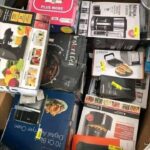
Each listing shows the pallet price, category, SKU, condition class, and shipping estimate. Read the condition note carefully; most lots are described as returns and overstock, and some are sold without a manifest, with the product photographs serving as the primary description of contents. Compare the asking price against your realistic resale value, not against MSRP.
Step 3 – Place a Business or Bulk Order
Add the pallet to your cart, or contact the team directly for custom sourcing requests, truckload deals, or manifest inquiries. Phone: +1 613-909-1050. Email: info@mapleliquidation.ca. For a first order, a phone conversation is worth the ten minutes – you can confirm condition, freight, and timing before any money moves.
Step 4 – Arrange Shipping or Pickup
Submit your full shipping address for a freight quote. Confirm two things at this stage: whether your delivery site has a dock or needs a liftgate, and who will be present to receive and sign for the pallet. Shipping is available nationwide across Canada, and many pallets carry a 1 to 5 business day estimate.
Step 5 – Set Up Repeat Sourcing
Once you know which categories perform for your business, the process compresses. Repeat buyers typically watch for new arrivals in their proven categories, keep a standing conversation open with the sourcing team, and move quickly when a matching load lands. This is where liquidation stops being a gamble and starts being a supply line.
Tips for Saving More on Wholesale Hardware Purchases
Buying in Liquidation Lots vs. Individual SKUs
Lot buying almost always wins on price per unit, but it transfers the sorting work to you. Budget honest labor time, most resellers find that processing a mixed hardware pallet takes two to five hours before anything is listed for sale. If your time is worth $50 an hour, that is $100 to $250 of real cost that belongs in your margin calculation.
Timing Purchases Around Inventory Drops
Liquidation supply is seasonal and predictable in broad strokes:
- January–February – post-holiday returns flood the market; the widest selection of the year
- March–May – outdoor power equipment and seasonal hardware as retailers reset for spring
- September–October – summer seasonal clearouts, including mowers, trimmers, and patio hardware
- November–December – thinner supply as retailers hold stock for peak selling season
Buying seasonal categories out of season is the single most reliable discount in this business. Outdoor equipment bought in October costs less than the same equipment bought in April.
Setting Up a Business Account for Repeat Discounts
Register a business account rather than ordering as a guest. It gives the supplier a purchase history to work from, which is what unlocks priority notice on incoming loads. In liquidation, early access to a good load is worth more than a percentage discount on a picked-over one.
Combining Orders to Save on Shipping
Freight is charged largely by space and distance, not by value. Two pallets moving together on one LTL shipment usually cost far less than two separate shipments. If you buy regularly, consolidating into fewer, larger deliveries – or stepping up to a truckload, is the fastest way to cut landed cost without negotiating a single price.
| A Practical First-Order Rule Buy one pallet before you buy five. Run it end to end, receive it, sort it, list it, sell it, and record every hour and every dollar. The numbers from that first lot will tell you more about whether this channel works for your business than any amount of research. Experienced liquidation buyers almost universally describe their first pallet as tuition. |
Frequently Asked Questions
Where can I buy wholesale hardware in Canada?
Canadian businesses buy wholesale hardware from four main channels: liquidation suppliers such as Maple Liquidation, traditional distributors such as Interline Wholesale Hardware in Vaughan, manufacturer direct programs, and online B2B marketplaces. Liquidation offers the deepest discounts on brand-name tools, while distributors offer the most consistent new stock.
What is the cheapest way to buy hardware in bulk?
Liquidation pallets and truckloads are consistently the cheapest per-unit route, typically 50–80% below MSRP, because the goods are retailer overstock and returns rather than new production. The trade-off is mixed condition and lot-level rather than SKU-level buying. For new, warrantied goods, manufacturer direct programs deliver the lowest cost but require large minimums.
Is liquidation hardware good quality?
Quality varies by lot, and honest suppliers say so. Liquidation lots typically contain a mix of new, like-new, open-box, used, and occasionally damaged or incomplete items, since they combine retailer overstock with customer returns. Buyers who inspect listing photographs, read condition notes, and price against realistic resale value rather than MSRP consistently do well; buyers who assume everything is new do not.
Does Maple Liquidation ship across Canada?
Yes. Maple Liquidation ships nationwide across Canada, with freight quoted to your specific address. Many hardware pallets carry a shipping estimate of 1 to 5 business days. Submit your shipping details through the site, or contact the team at +1 613-909-1050 for a quote.
What’s the minimum order for wholesale hardware?
It depends on the channel. With liquidation suppliers, the minimum is usually a single pallet, commonly priced between about $1,200 and $4,500 in the hardware and tools category. Traditional distributors often sell by the case, while manufacturer direct programs may require container-level volume or an annual spend commitment.
Can small businesses buy wholesale, or only large retailers?
Small businesses can absolutely buy wholesale. The single-pallet entry point in liquidation was built for exactly this buyer, and Maple Liquidation’s stated customer base includes home-based sellers, auction sellers, small retail stores, and part-time resellers alongside larger B2B accounts. Some traditional distributors do require a business number or resale certificate, so have that documentation ready.
Do I need a business licence or GST/HST number to buy wholesale in Canada?
Requirements vary by supplier. Many liquidation suppliers sell to both B2B and B2C buyers with no licence required, while traditional distributors and manufacturer programs usually require a business number and often a GST/HST registration. If you plan to resell, registering is worth doing regardless, it lets you claim input tax credits on your purchases.
What does “no manifest” mean on a liquidation pallet?
A manifest is an itemized list of everything in the lot with quantities and retail values. A pallet sold without a manifest has no such list, and the product photographs serve as the main description of contents. Unmanifested lots are priced lower to reflect that uncertainty, so they suit experienced buyers who can judge value from images.
Can I return a liquidation pallet if I’m not satisfied?
Usually not. Liquidation pallets are generally sold as-is with no exchange or refund, and Maple Liquidation states this clearly on its product listings. This is standard across the industry and is part of why pricing is so far below retail, so read the condition notes and photographs carefully before ordering.
Is DeWalt liquidation in Canada legitimate?
Yes, when the goods come from a verifiable Canadian retail source. Major brands including DeWalt, Milwaukee, Ryobi, and Ridgid move through liquidation channels regularly as overstock, shelf-pulls, and customer returns from Canadian retailers. The authenticity question to ask any supplier is simple: where did this inventory come from? A supplier who names its sourcing channel and shows photographs of the actual lot is giving you the answer you need.
Conclusion – Choosing the Right Wholesale Hardware Partner in Canada
There is no single best supplier for every Canadian business. There is a best supplier for your volume, your margin structure, and your tolerance for variability.
If you need identical new units with warranty coverage on a fixed schedule, a traditional distributor earns its markup. If you move enormous volume in one category, go direct to the manufacturer. And if your business profits on the spread, reselling, discount retail, export, or stocking a job site without paying retail markup, liquidation delivers the lowest landed cost available in the Canadian market.
Judge any supplier on three things: quality you can verify, pricing you can see in full before you commit, and reliability you can plan around. Maple Liquidation earns consideration on all three: inventory sourced weekly directly from top Canadian retailers, condition and terms stated plainly on every listing, single-pallet entry points, and shipping nationwide across Canada.
| Call to action Ready to compare real numbers? Browse Maple Liquidation’s current wholesale hardware inventory to see live pallet pricing, brand mixes, and condition notes, or call +1 613-909-1050 to discuss custom sourcing and truckload deals. |