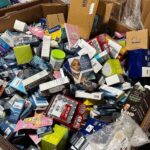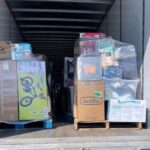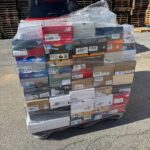

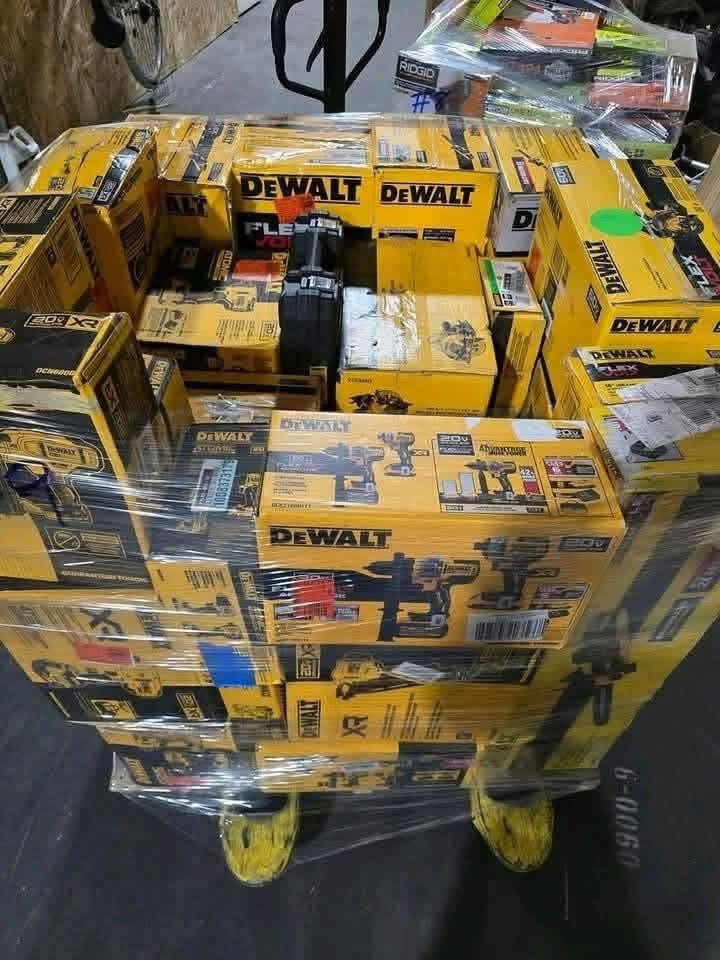
| Quick Answer Businesses in Canada can source tools through wholesale suppliers and liquidation marketplaces that sell inventory in pallets or bulk lots. Liquidation inventory may include overstock, customer returns, shelf pulls, discontinued products, and other excess stock, so condition varies by lot. Before ordering, buyers should evaluate tool condition, brand and model information when available, manifests, pricing, shipping costs, and the supplier’s purchasing terms. |
Buying tools at wholesale or liquidation prices gives retailers and resellers access to bulk inventory at a lower acquisition cost than buying items one at a time from a retail store. For a hardware shop, a marketplace seller, or a contractor stocking up, that difference can matter.
Liquidation inventory does vary, though. The same category can produce a pallet of sealed retail boxes or a pallet of mixed customer returns, and the two require very different plans. Understanding where the tools came from, what condition they are in, what information is available, and what the total landed cost will be is the real work.
Maple Liquidation is a Canadian liquidation supplier that lists tools and hardware alongside other categories, with shipping across Canada. This guide explains how tool liquidation works so you can evaluate any supplier, including ours, with clear expectations.
What Is Tool Liquidation?
Tool liquidation is the bulk sale of surplus, returned, overstock, shelf-pull, or discontinued tools through liquidation channels instead of standard retail.
Inventory usually comes from sources like these:
- Customer returns
- Retail overstock that did not sell through
- Shelf pulls
- Discontinued products and older model numbers
- Seasonal inventory after the season ends
- Packaging or branding changes
- Excess warehouse inventory
- Store closures and inventory reductions
Liquidation does not automatically mean used or damaged. A pallet of overstock cordless drills may be sealed and retail-ready, while a returns pallet may hold a mix of conditions. The source determines the condition, not the word “liquidation.”
What Types of Tools Can You Find in Liquidation Inventory?
Tool and hardware lots are broad. Depending on the pallet, they can include:
- Power tools and cordless tools
- Drills, impact drivers, saws, grinders, and sanders
- Hand tools and measuring tools
- Tool accessories, bits, and blades
- Tool storage and workshop equipment
- Hardware and fasteners
- Automotive tools
- Outdoor and landscaping tools
Available products and categories change with each lot. Two pallets listed in the same Tools & Hardware category in the same month can contain very different items, so always read the current listing rather than assuming.
How Do Tool Liquidation Pallets Work?
The process is straightforward once you have seen it once:
- Excess, returned, or discontinued inventory is sourced from retailers, distributors, or warehouses.
- Inventory is sorted or grouped where applicable, sometimes by category and sometimes by condition.
- Tools are prepared into pallets or bulk lots.
- Product information is prepared, which may include a manifest, photos, or a description.
- Buyers review the available details for the specific lot.
- Buyers select the inventory that suits their store or customer base.
- Payment and shipping arrangements are completed.
- The pallet or truckload is delivered.
- The buyer inspects the products on arrival and sorts them for resale.
Pallet composition varies significantly between lots. Treat each listing as its own product, not as a repeat of the last one you bought.
Are Liquidation Tools New or Used?
Both are possible. Condition depends entirely on the inventory source, which is why condition information matters more than any other detail in a listing.
New or unopened. Items still in original packaging that may be retail-ready.
Open box. Packaging has been opened, but the product may still be complete and usable.
Customer returns. Tools bought and returned by customers. Condition can range from unopened to lightly used to non-working.
Shelf pulls. Products removed from retail shelves because of inventory changes, packaging updates, discontinued lines, or seasonal resets.
Damaged packaging. Contents may be intact while the box is crushed, torn, or relabelled.
Verify the stated condition before you buy, because your resale channel depends on it. Marketplace listings for sealed overstock and for as-is returns are two different businesses.
How to Find Quality Tools at Wholesale Prices
This is where careful buyers separate themselves from hopeful ones. Before committing to a lot, work through the details below.
- Product condition: the stated grade for the lot, and whether conditions are mixed.
- Brand and model numbers: specific models let you check current market pricing rather than guessing.
- Packaging and completeness: are cases, manuals, and original boxes included.
- Accessories: blades, bits, chargers, and attachments that affect resale value.
- Batteries and chargers: for cordless tools, note whether they are included or sold as bare tools.
- Manifest availability: a manifest lists what is in the lot and is the single most useful document you can get.
- Supplier transparency: clear descriptions, photos, and honest condition notes.
- Shipping cost and total landed cost: the number that actually determines your margin.
A low pallet price is not automatically a good deal. Calculate the cost per usable item instead. A $1,200 pallet with 40 sellable tools costs $30 per item before shipping. A $900 pallet with 15 sellable tools costs $60. The cheaper pallet is the more expensive inventory.
Wholesale Tools Canada vs. Retail Tool Purchasing
| Feature | Wholesale Tools | Retail Tool Purchasing |
| Purchase quantity | Usually larger quantities | Usually individual items |
| Cost per unit | Can be lower when buying in bulk | Usually higher per item |
| Product selection | May include mixed or bulk inventory | Buyer selects individual products |
| Best for | Retailers, resellers, businesses | Individual users and small purchases |
| Inventory planning | Requires storage and planning | Easier for small quantities |
| Product condition | Depends on the inventory source | Usually clearly defined |
| Business scalability | Better suited to bulk sourcing | Less suitable for large inventory needs |
Wholesale buying does not guarantee higher profit on its own. Your results depend on acquisition cost, local demand, product condition, selling fees, shipping, storage, and the rest of your operating expenses.
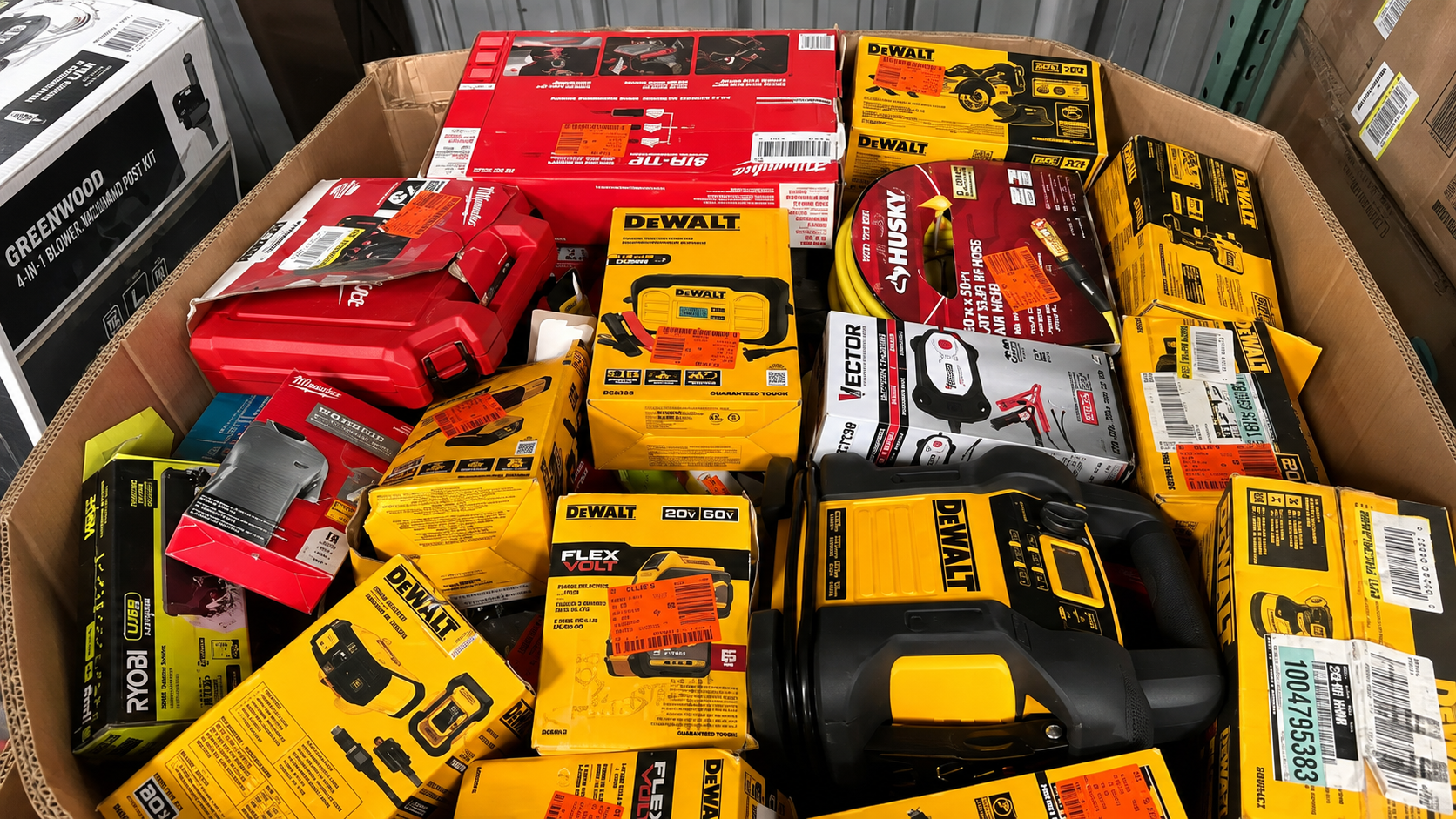
What Is the Difference Between Overstock and Customer Return Tools?
Overstock tools were produced or purchased for retail but never sold through the original channel. They are often still sealed.
Customer return tools were bought and then returned. Condition ranges widely, and some units may be missing parts or may not function.
Shelf pull tools were removed from retail shelves because of discontinued lines, packaging changes, or inventory decisions rather than any defect.
Overstock tends to suit buyers who want new, retail-ready inventory with less sorting. Returns generally require more inspection but can come at a lower cost per item. Neither category is always the better choice, and the right one depends on your customers and how much sorting time you have.
Are Tool Liquidation Pallets Worth Buying?
Liquidation tends to work well for businesses that:
- Have storage space for bulk inventory
- Understand what their customers actually buy
- Can inspect and test incoming products
- Are comfortable with mixed inventory
- Understand condition grading
- Calculate total acquisition cost, not just pallet price
- Have a resale channel ready before the pallet arrives
It is a weaker fit when you need exact products, guaranteed quantities, or the same assortment every month. If a job requires 20 identical impact drivers by Friday, buy those directly and use liquidation for the parts of your inventory that can flex.
What About DeWalt Liquidation Canada?
Searches for DeWalt liquidation Canada are common, and branded power tool lots do appear in liquidation channels. Brand availability depends entirely on current inventory, and no honest supplier can promise a specific brand will be in stock or included in a given pallet.
If a particular brand matters to your customers, check current listings, read the manifest and product descriptions, confirm model numbers, and ask the supplier directly about what is available now. Buying a mixed pallet in the hope that a premium brand appears is a guess, not a sourcing strategy.
How Much Do Tool Liquidation Pallets Cost?
Pallet pricing is not fixed. It moves with:
- Number of tools and pallet size
- Tool type and category
- Brand mix
- Product condition
- Estimated retail value
- Product completeness and manifest availability
- Current inventory
- Weight and shipping distance
Always calculate your landed cost: pallet price plus shipping plus applicable fees plus handling and storage. Then divide by the number of items you realistically expect to sell. That figure, not the sticker price, tells you whether a lot is worth buying.
Who Should Buy Tool Liquidation Pallets?
Tool liquidation suits hardware stores, tool retailers, discount stores, contractors and tradespeople buying for their own crews, Amazon and eBay sellers, online resellers, flea market vendors, marketplace sellers, small businesses, and new entrepreneurs testing a category.
The common thread is knowing who will buy the tools. Decide on your channel and your customer before you invest in bulk inventory, not after the pallet is sitting in your garage.
Things to Check Before Buying Tool Liquidation
- Product condition and grading
- Tool completeness and included accessories
- Batteries and chargers for cordless items
- Packaging condition
- Model numbers and brand information
- Manifest availability and pallet quantity
- Shipping costs and delivery timelines
- Storage requirements at your location
- Target customer demand in your area
- The supplier’s return and purchasing policies
For power tools, inspect applicable components and test products when it is practical and permitted. Checking that a battery holds a charge takes a few minutes and prevents a bad listing later.
Tips for First-Time Tool Liquidation Buyers
- Start with one manageable pallet rather than a truckload.
- Understand the stated inventory condition before you pay.
- Review the manifest when one is available.
- Research the product categories and current market prices.
- Calculate shipping before purchasing, not after.
- Estimate your cost per usable item.
- Make sure you have enough storage space ready.
- Inspect the inventory as soon as it arrives.
- Separate products by condition and category right away.
- Track which products sell well before placing larger orders.
Learn how one supplier’s inventory and grading work before you scale up. The first pallet is tuition, and it is cheaper as a single pallet.
Common Mistakes to Avoid
- Buying only because the pallet looks cheap
- Ignoring shipping costs when comparing lots
- Assuming all liquidation tools are new
- Assuming every pallet contains premium brands
- Skipping the available product information
- Not checking tool completeness and accessories
- Buying more inventory than you can store
- Ignoring local customer demand
- Failing to inspect inventory after delivery
- Expecting every pallet to have identical contents
- Confusing estimated retail value with actual resale value
Signs Tool Liquidation May Be Right for Your Business
- You operate a hardware or tool store.
- You sell tools online.
- You are looking for bulk inventory.
- You have adequate storage space.
- You understand your target customers.
- You can inspect incoming inventory.
- You are comfortable with changing product selections.
- You want to expand your product range.
- You understand that liquidation inventory can vary in condition.
Always review product condition, available inventory information, shipping costs, and purchasing terms before placing an order.
Why Choose Maple Liquidation for Tools in Canada?
Maple Liquidation is a Canadian liquidation supplier offering bulk inventory to retailers, resellers, and small businesses, with a dedicated Tools & Hardware category covering power tools, hand tools, automotive accessories, and home improvement equipment.
Buying domestically keeps shipping arrangements simpler than cross-border sourcing, and we ship across Canada. Lot listings include the condition grade and available product details so you can assess a pallet before you commit. If you want to spread risk across categories, we also list wholesale electronics, general merchandise, and truckload liquidation for higher volume buyers.
Inventory changes regularly, so we cannot promise that a specific brand, tool type, quantity, or condition will be available on any given day. The practical approach is to check the current category listings and ask us directly. You can learn more about Maple Liquidation or contact our team about available inventory.
Frequently Asked Questions
Where can I buy tool liquidation pallets in Canada?
Canadian liquidation suppliers and wholesale distributors sell tool pallets and bulk lots. Maple Liquidation is one option, and current lots are listed in the Tools & Hardware category.
What is tool liquidation?
Tool liquidation is the bulk sale of surplus, returned, overstock, shelf-pull, discontinued, or excess tool inventory through liquidation channels rather than regular retail.
Are liquidation tools new or used?
They can be new, open box, customer returns, shelf pulls, or items with damaged packaging. The condition depends on where the inventory came from, so check the grade on each lot.
Are tool liquidation pallets worth buying?
They can be, for retailers and resellers who understand condition grading, pricing, storage, shipping, and local resale demand. They are a poor fit if you need guaranteed specific products.
What types of tools can be found in liquidation pallets?
Power tools, hand tools, cordless tools, accessories, hardware, fasteners, automotive tools, and workshop equipment are all possible. Contents vary by lot.
How much does a tool liquidation pallet cost?
Pricing varies with quantity, condition, product type, brand mix, pallet size, and shipping distance. Compare lots on landed cost per usable item rather than pallet price alone.
Can I find DeWalt liquidation in Canada?
Branded power tool lots do appear in Canadian liquidation inventory, but availability changes constantly. Check current listings and manifests rather than assuming a specific brand will be included.
What should I check before buying a tool pallet?
Condition, completeness, accessories, batteries and chargers, manifest information, shipping costs, storage requirements, and whether your customers actually want those products.
Can beginners buy tool liquidation pallets?
Yes. Start with one manageable pallet, learn how condition grading and shipping work with that supplier, inspect everything on arrival, and scale up once you know what sells.
Why buy liquidation tools from a Canadian supplier?
Domestic sourcing usually means simpler shipping arrangements, shorter transit times, and less cross-border paperwork, duty, and currency complexity than importing lots.
Conclusion
Tool liquidation gives Canadian businesses access to bulk tools and hardware at wholesale prices by moving surplus, overstock, returned, and shelf-pull inventory outside normal retail. The trade-off is variability. Because contents and condition differ from lot to lot, your results depend on how carefully you read the listing, check the manifest, confirm the condition, and calculate the full landed cost before you buy.
For hardware stores, resellers, contractors, and small businesses with storage space and a clear picture of their customers, liquidation is a practical way to add inventory and test new product categories without paying retail. Start with one pallet, track what sells, and grow from there. When you are ready to look at current options, browse the Tools & Hardware category at Maple Liquidation, or speak with the team if you want help matching a lot to your business.