

Quick AnswerCanadian resellers can find sports, fitness, bicycle, and outdoor inventory through liquidation channels, and overstock sporting goods lots may sit alongside shelf pulls, closeout or excess merchandise, and customer returns, depending on the listing. The right lot depends on your customers, fulfilment setup, storage space, and target selling price. |
Sporting goods resale rarely means handling one predictable product line. The category can include compact accessories, children’s bicycles, exercise equipment, outdoor products, or mixed family goods, each creating a different post-purchase workload.
Buying Overstock Sporting Goods should therefore begin with a resale plan, not simply a low purchase price. Buyers need to know what their business can receive, prepare, list, deliver, and replenish.
Why Overstock Can Create Different Buying Opportunities
Overstock generally reflects inventory beyond a retailer’s immediate selling needs. Liquidation lots can also draw on other sources, so each listing’s details matter more than any single assumption applied to every pallet.
For Canadian context, Innovation, Science and Economic Development Canada’s industry profile shows sporting and athletic goods manufacturing rebounding in 2025, with GDP up 9.9% to $290.4 million and shipments up 15.2% to $984.1 million. Those figures cover manufacturing, not resale, and remain below earlier peaks, so treat them as background only.
This guide focuses on the buying and fulfilment side of overstock-led sporting goods lots. For a wider look at the category, see the Sporting Goods Liquidation Pallets guide.
Build an Acquisition Filter Before Browsing Inventory
Start by deciding what qualifies for your business. Use a buying filter based on customer fit, handling effort, selling method, and the capital you want tied up in one assortment.
A useful filter can also include a maximum purchase size and preferred product mix. This helps prevent an appealing pallet from using more cash or warehouse capacity than the business planned to allocate.
Write a Stock Brief for the Customers You Already Serve
Begin with the buyer. A family-focused reseller may view a bicycle lot differently from a seller whose customers mainly want compact fitness accessories.
A practical stock brief can define:
- Primary customer type
- Preferred sports or activity categories
- Typical selling-price range
- Maximum item size you can handle
- Preferred online or local selling channel
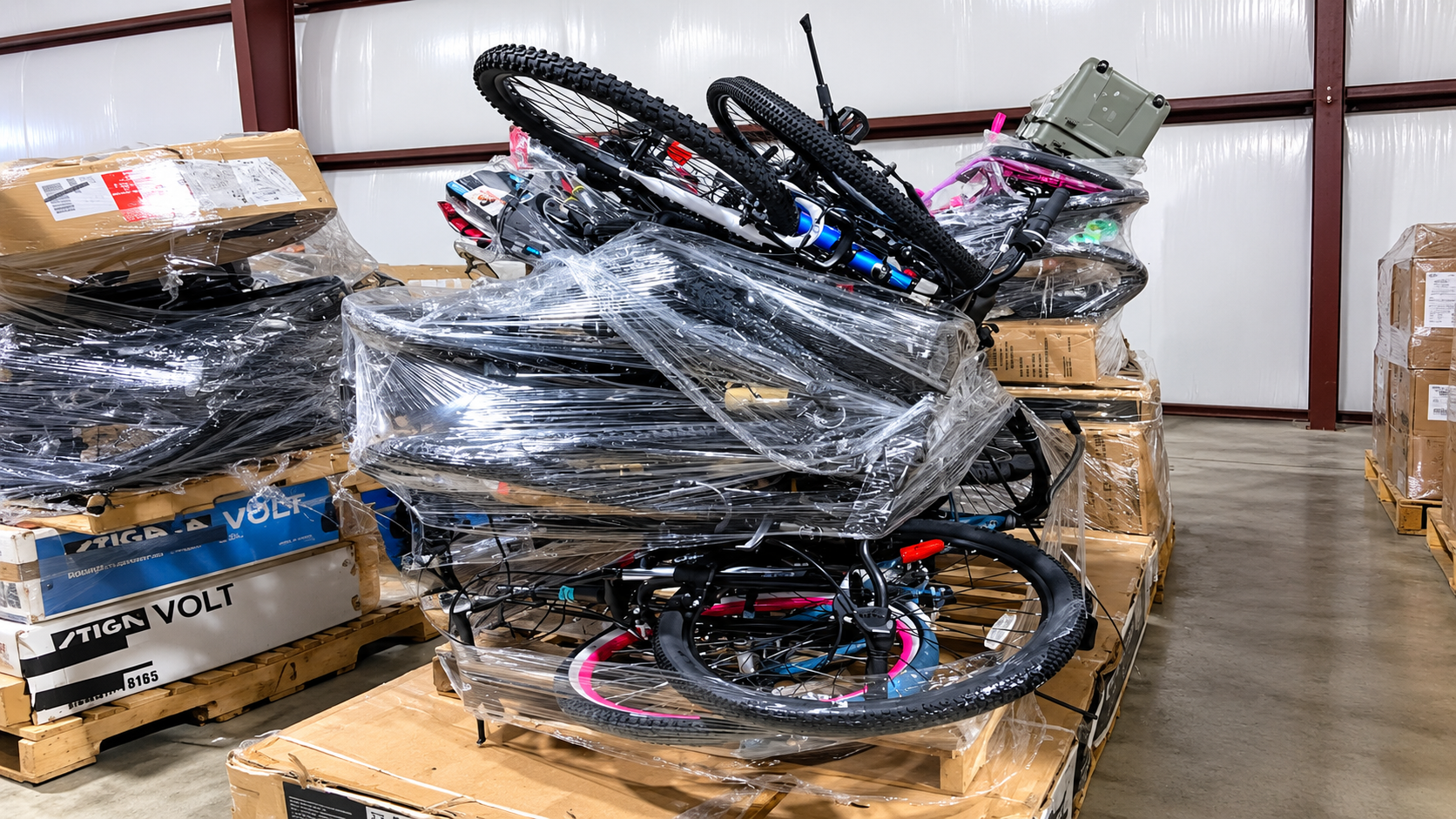
This brief helps you quickly accept or reject a lot. For example, Maple Liquidation’s Kids Bicycles & General Merchandise Pallet #21 is clearly different from a fitness-equipment assortment, so each would suit a different reseller profile.
Compare Assortment Depth, Not Just the Number of Items
More items don’t automatically make an assortment much more useful. Consider whether products serve the same audience and can be photographed and listed efficiently.
When reviewing an assortment, look at:
- How many product types are visible
- Whether products serve similar buyers
- Brand or model information where shown
- Repetition versus one-off items
- The amount of listing work the mix may create
A tighter assortment may be easier to position, while a mixed lot can suit a general reseller.
Classify Stock by Fulfilment Method Before You Buy
Fulfilment varies widely across sporting goods. A small accessory may be parcel-friendly, while a bicycle or exercise station may suit local pickup or delivery.
Sort potential purchases into three fulfilment groups:
- Parcel-friendly items
- Local pickup or delivery items
- Bulky stock requiring dedicated floor space
The Mixed Bicycles & Outdoor Equipment Pallet #202 illustrates why this distinction matters. Its listing identifies bicycles and outdoor recreation items, so a buyer can consider handling and fulfilment requirements before committing to the lot.
Work Backward From a Resale-Ready Cost
The purchase price is only the starting point. Estimate what it will cost to make inventory ready for your chosen sales channel.
Your resale-ready calculation may include:
- Purchase cost
- Freight or pickup
- Payment or marketplace fees
- Packaging and labelling supplies
- Local delivery costs where applicable
- Staff or handling time
This is especially useful when comparing a low-priced bulky lot with a higher-priced compact assortment. Compare lots on total cost per sellable item, not on pallet price alone.
| Inventory Profile | Reseller Fit | Main Preparation Need | Practical Fulfilment Route |
| Children’s bicycles | Family-focused or local reseller | Size, model, and photo organization | Local pickup or delivery |
| Fitness equipment | Fitness, auction, or general reseller | Product identification and listing details | Pickup, delivery, or freight |
| Compact sports accessories | Online marketplace seller | Fast SKU and photo workflow | Parcel shipping |
| Outdoor recreation items | Seasonal or general reseller | Activity-based grouping | Parcel or local sale |
| Mixed recreation goods | Broad-category reseller | Separate products by audience | Mixed fulfilment |
Create a Listing Queue Before Inventory Reaches Storage
Decide in advance which products to photograph and list first based on selling channel, prep time, and space requirements.
A simple listing queue might prioritize:
- Large items occupying floor space
- Products with clear brand and model details
- Items suited to an active selling period
- Easy-to-photograph products
- Related products that can be listed together
This sequencing keeps receiving orderly when bulky and compact products arrive together. The goal is not to predict sales, but to create a clear path from unloading through photography, listing, storage, and fulfilment.
Use Product-Specific Information to Shape the Sales Format
Different sporting items need different listing styles. A recognizable fitness product may need model details, while a mixed recreational item may need dimensions, intended use, and clear photos.
Useful listing preparation can include:
- Recording visible brand and model information
- Measuring larger items where needed
- Photographing included components
- Noting packaging shown with the product
- Choosing pickup, delivery, or shipping before publishing
Maple Liquidation’s Sports & Fitness Equipment Assortment Pallet #176 currently identifies items such as a portable basketball system and a weight bench. Those product types would naturally require different listing and fulfilment decisions from small sporting accessories.
Add Adjacent Categories Only When the Buyer Overlap Is Clear
Expand into another category when it gives existing customers a logical next purchase, not simply to add stock.
Potential overlap can come from:
- Similar customer activities
- Shared seasonal use
- Comparable delivery methods
- Related home or outdoor projects
- Existing marketplace audiences
Treat any new category as a separate sourcing decision with its own product, storage, and fulfilment requirements.
Review What Actually Moved Before Reordering
Base repeat purchases on your own sales records, not on the assumption that one successful item represents every sporting-goods lot.
Track practical signals such as:
- Time from listing to sale
- Number of buyer enquiries
- Pickup versus shipped orders
- Space occupied while awaiting sale
- Categories or price bands that moved consistently
If a category outside sporting goods keeps drawing the same audience, evaluate it separately. Keeping its results apart shows whether diversification improves the business or only adds stock volume.
What Canadian Resellers Can Verify Before Ordering From Maple Liquidation
Buyers need verifiable information about the specific inventory under consideration. Maple Liquidation’s Sports & Outdoors category lets buyers browse currently listed sports, fitness, bicycle, and recreation lots before deciding what fits their business.
Before ordering, buyers can use:
- Current lot photos and listing details
- Category information for sports, fitness, bicycle, and recreation lots
- Canada-wide shipping details
- Multi-pallet options where available
- Customer support for questions about a specific lot
This information supports a purchasing decision without assuming that every lot has the same contents, source, or resale outcome. Contact us today if you want clarification about a current sports listing or its shipping details before ordering.
Turn Affordable Sourcing Into a Repeatable Buying Process
The value of an overstock lot depends on more than its purchase price. Know what your business can handle, how products will reach customers, and which details matter before buying.
Canadian resellers can use the current Sports & Outdoors listings as the starting point, then apply a consistent acquisition filter to each option. That keeps purchasing tied to real operating capacity and gives each lot a clear role within the resale business.
Frequently Asked Questions
Is a focused sporting-goods lot better than a mixed lot?
Neither is automatically better. A focused lot can simplify merchandising, while a mixed assortment may suit resellers with broader audiences and multiple sales channels.
How do I decide whether to ship sports inventory or sell it locally?
Consider product dimensions, weight, packaging needs, delivery cost, customer location, and whether the selling platform supports practical fulfilment for that item.
Do the photos show the actual pallet?
That depends on the listing. Photos may show the actual items or examples of what’s included, so check the listing wording.
Are quantities exact or estimated?
Many listings give estimated quantities, so check whether the figure is exact or approximate before ordering.
What affects the price and condition of a sporting goods lot?
Prices depend on the specific lot, its contents, and the condition wording in the listing. Bulky items can also carry higher shipping or pickup costs.