

Quick AnswerCanadian resellers can buy home goods liquidation pallets containing kitchenware, décor, small appliances, and other household essentials. Resale results can depend on understanding customer demand, reviewing available product information, checking condition where applicable, and considering brand, completeness, and comparable pricing. |
Household products cover a wide range of everyday needs, from kitchenware and storage solutions to décor and small appliances. Demand can vary by product, season, brand, and customer preferences, so resellers should assess individual lots rather than assume every household item will perform equally well.
The challenge is knowing which items in a mixed lot fit your resale plans. This guide covers what to look for when sourcing home goods liquidation pallets, so you can make more informed purchasing decisions and plan your resale strategy accordingly.
Reading Demand Signals Before You Buy
Different household products can vary in how quickly they attract buyer interest. Understanding which types of products may appeal to your customers can help you make more informed purchasing decisions and avoid overcommitting to slower-moving inventory. Kitchenware and small appliances may appeal to a broad range of customers, while decorative items can depend more on style, season, and customer preferences.
Before making a purchase commitment, there are certain signals to take note of:
- Brand recognition on home goods liquidation pallets
- Integrity of multi-piece sets
- Consider décor items that align with seasonal preferences
- Quality of presentation and packaging overall
Paying attention to these factors can help resellers compare lots more carefully and avoid committing too much inventory to products that may be harder to sell. Reviewing available inventory information before purchasing can help reduce guesswork and give you a clearer basis for evaluating a lot.
Exploring the entire Home Decor & General Merchandise category gives a realistic sense of what’s available and how it is typically priced.
According to Mordor Intelligence, the home furniture market in Canada was valued at $9.40 billion in 2026 and is expected to reach $13.21 billion by 2031, growing at a steady rate. Broader household and furniture market trends can provide useful context as resellers evaluate purchasing decisions.
Building a Smarter Home Goods Resale Strategy
These factors shape real-world decisions about whether a home goods purchase fits your resale plans or becomes slower-moving inventory.
Identifying Suitable Item Categories
Home goods liquidation pallets can contain different product categories, so understanding these differences can help you decide what to look for in a lot. Small kitchen appliances and cookware may appeal to a broader range of buyers, while decorative items can depend more heavily on style, season, and customer preferences.
Categories worth prioritizing include:
- Gadgets and appliances for the kitchen
- Sets for cooking and baking
- Solutions for organizing and storing
- Essentials for the bathroom and bedroom
Starting with these categories can help you build an inventory mix while learning which products appeal most to your audience. Checking the New Arrivals page can help you review recently listed home goods pallets and other available inventory.
Verifying Condition and Completeness
Home goods pallets can contain products with multiple components, ranging from appliance accessories to bedding sets. For products sold as sets or with multiple components, reviewing the available information about completeness can help you assess whether they fit your resale plans.
A thorough check typically covers:
- Checking whether the listed accessories are included
- Checking electrical items where possible
- Reviewing the condition and completeness of the packaging
- Visible product condition where provided
Reviewing these details before listing can help you identify potential issues and set appropriate expectations for buyers.
Sourcing Home Goods Liquidation Pallets
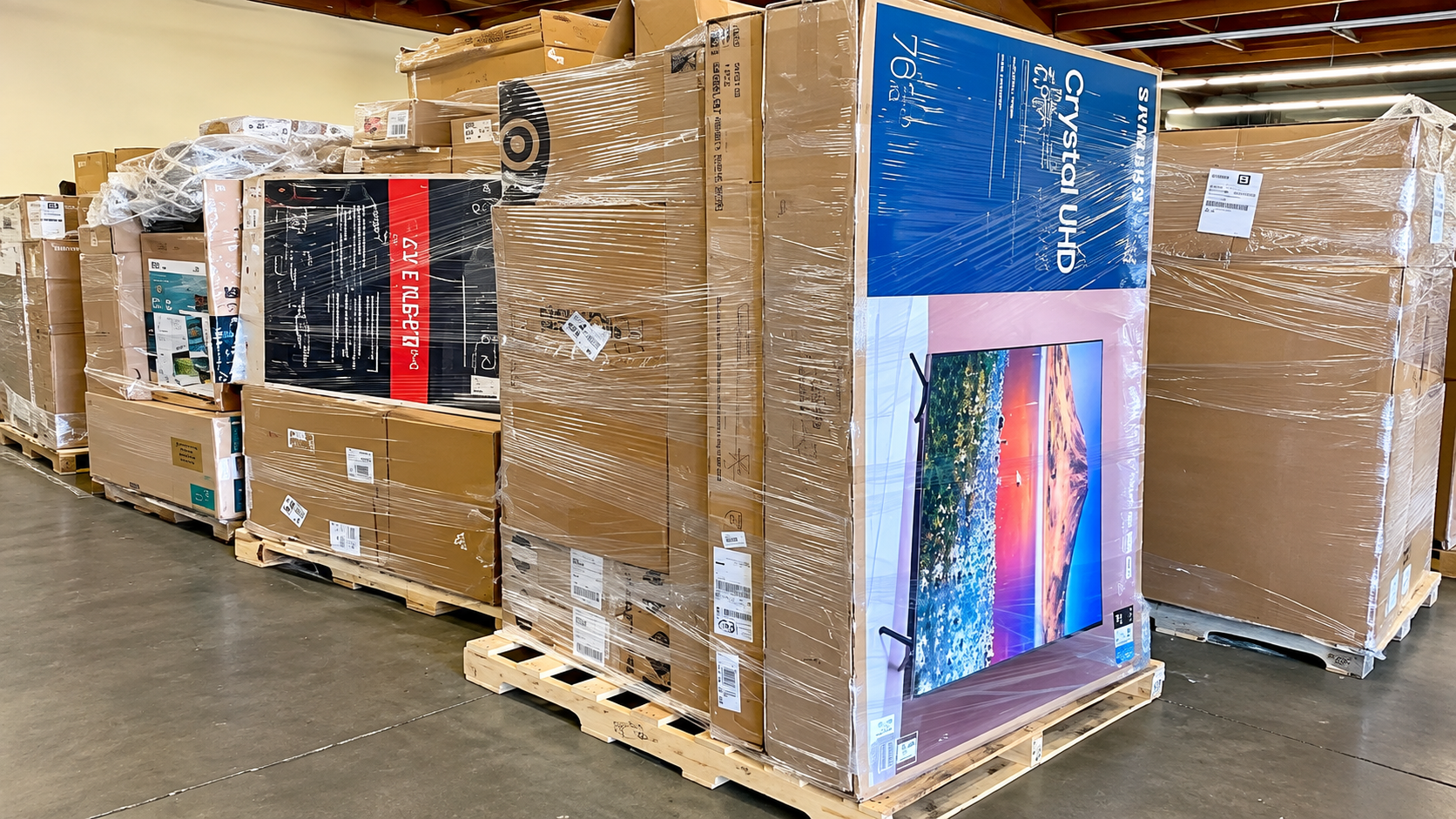
When sourcing home goods liquidation pallets, review the available product photos, listing information, category details, and other information provided for the specific lot. This helps you understand the inventory and decide whether it fits your resale plans.
Useful lot information may include:
- Product photos showing available inventory
- Product categories and brand information where provided
- Condition details where available
- Lot size and other purchasing information
Wholesalers looking for more sourcing options can also explore buying Amazon liquidation pallets as another type of liquidation inventory.
Pricing Household Items for Resale
Pricing items from home goods liquidation pallets involves considering brand recognition, completeness, condition, and comparable listings. Reviewing similar products before setting a price can provide a useful basis for your pricing decisions.
Effective pricing approaches include:
- Comparing recent prices for similar individual items
- Considering whether bundled items offer added value
- Adjusting prices based on seasonal demand for décor
Reviewing comparable listings can give you a more useful starting point than guessing what a household item might be worth.
Choosing Where to Resell Household Items
Different resale avenues work for different home goods. Individual pieces and collectible household items may suit online sales, while local sales can work well for bulkier furniture. Choosing a suitable sales channel helps you match inventory with the right audience while considering shipping or pickup requirements.
Common resale channels include:
- E-commerce sites for small items
- Local marketplaces for bulky furniture and other large items
- Stores that sell used household items
- Grouped parcels for bulk purchasers
Testing different channels can help you determine where specific inventory types attract the most buyer interest. Resellers looking to broaden their offerings sometimes browse Toys & General Merchandise alongside home and garden to attract more household buyers.
Managing Storage for Varied Inventory
Home goods come in a wide range of sizes, from small kitchen utensils to large furniture, so organization and storage are essential as stock builds up. Good organization can make it easier to locate inventory, protect fragile products, and manage orders as stock increases.
Good storage habits include:
- Separating inventory by product type and size
- Labeling bins according to product categories
- Keeping textiles in clean, suitable storage areas
- Reviewing inventory regularly to identify slower-moving products
Resellers who deal in larger volumes sometimes check out Liquidation Truckloads to increase profits. Resellers considering larger purchases should compare the lot size, storage requirements, shipping costs, and available resale channels before committing to a larger order.
Scaling Your Home Goods Resale Operation
Once you have established a workable process, you may consider increasing order volume gradually as your storage capacity, cash flow, and resale channels allow. Scaling before storage and inventory systems are ready can create additional operational challenges.
Sustainable growth typically involves:
- Gradually increasing order volume
- Allocating available funds towards additional stock
- Building relationships with suppliers
- Tracking which categories receive the most customer interest
Gradually scaling your liquidation reselling business can give you more time to assess storage capacity, cash flow, customer demand, and inventory needs.
Exploring Home Goods Inventory With Maple Liquidation
When sourcing home goods liquidation pallets, resellers may have questions about a specific lot, available product information, shipping, or purchasing requirements. Reviewing the available lot details and asking questions about the inventory can help buyers make more informed decisions.
When reviewing available inventory, resellers can consider:
- Product photos showing available inventory
- Listing and category information for the specific lot
- Condition details where provided
- Answers to questions about purchasing and shipping
Contact us today to learn more about available home goods inventory and ask questions about specific lots before purchasing.
Approaching Home Goods Resale With a Clear Strategy
Household goods cover a broad range of products, so resale planning should consider product condition, completeness, customer demand, and suitable sales channels.
Resellers who take time to understand these patterns can make more informed purchasing and pricing decisions rather than simply buying whatever inventory is available.
Treating the category as a structured resale operation can also make it easier to plan purchasing, storage, pricing, and sales. As you learn which products and channels receive the most suitable customer interest, you can refine your approach over time.
Frequently Asked Questions
Are furniture items usually included in home goods pallets?
Some lots may contain smaller furniture pieces, while others may focus primarily on kitchenware, décor, small appliances, and other household products. Review the available information for the specific lot to understand its contents.
How can I tell if a kitchen appliance is still working?
Where possible, check electrical items before listing them for resale. A visual inspection can provide useful information about the product’s condition, but it cannot confirm whether an appliance functions properly.
Is it hard to resell seasonal décor items?
It can depend on the season, style, and type of décor. Considering seasonal shopping periods can help you plan which décor items to source and how to price them.
Does packaging condition affect resale pricing?
Packaging can influence how buyers perceive certain products, particularly appliances, gift-oriented items, and products where the original packaging provides useful product information. Consider the available packaging details when evaluating a lot.
Can home goods be combined with other resale categories?
Yes. Some resellers combine home goods with general merchandise or related categories to create a broader inventory mix. The right combination depends on your customer base, available storage, and the types of products included in each lot.